
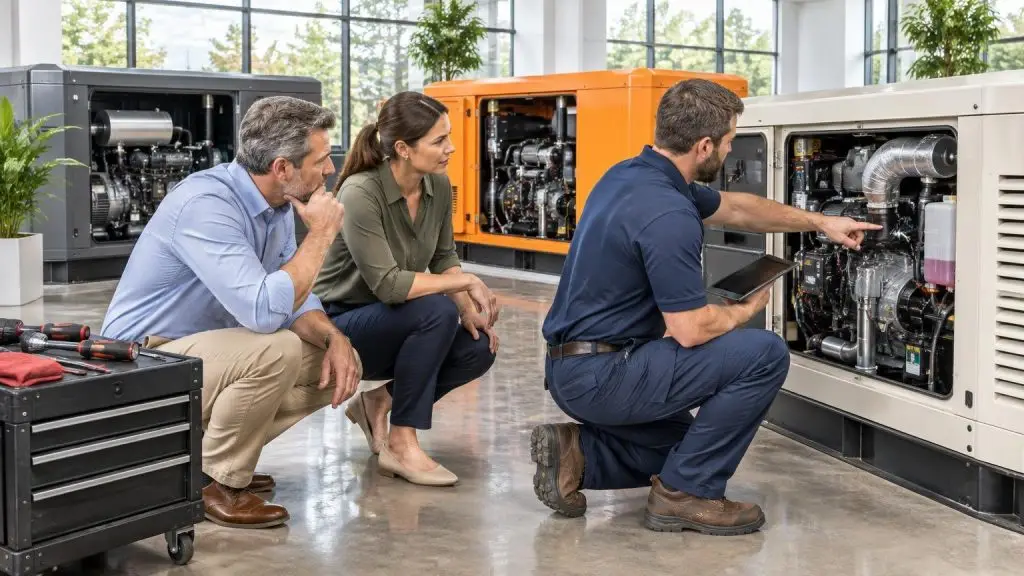
Choosing a standby generator starts with your home, not the logo on the enclosure. Brand matters, but it is only one part of a dependable backup-power plan. We encourage you to look at the complete system, including generator size, fuel supply, transfer equipment, installation quality, maintenance, monitoring, and the support available when the power goes out.
A comparison of standby generator brands is especially useful during the holiday season, when many families are thinking ahead about gatherings, travel, and being prepared. It is also a smart time to plan before hurricane-season demand creates pressure to make a quick decision. Our goal is simple: help you ask better questions so you can choose with confidence.
Compare the Complete System, Not Just the Nameplate
A familiar brand name can be reassuring, but no manufacturer is automatically the right fit for every home. One model may work well for a smaller priority-load system, while another may be better suited for a larger home with multiple air conditioning units, major appliances, and more complex electrical needs.
When we review generator options with homeowners, we look beyond the manufacturer and compare the details that affect day-to-day performance:
- Rated power output and the type of fuel the unit uses
- Air-cooled or liquid-cooled design
- Enclosure materials, noise information, and weather exposure
- Available transfer switches and load-management options
- Parts availability and local service support
For a fair comparison, make sure the proposals cover similar scopes of work. A smaller system that powers a few selected circuits is not directly comparable to a system designed to support most of the home. One proposal may appear less expensive or more powerful simply because it includes different equipment, different electrical work, or a different level of load coverage.
Support matters, too. Before choosing a model, we recommend asking who will handle warranty work, annual service, troubleshooting, and repairs. A generator is easier to own when qualified help, replacement parts, and clear answers are available in the Houston area.
Size Backup Power Around Your Household Needs
Correct sizing often matters more than choosing the most recognizable brand. A generator needs to match how your household uses power during an outage, not just the square footage of your home.
That conversation should include more than lights and refrigerators. We look at equipment that can create larger demand, including air conditioning, electric cooking appliances, pool equipment, well pumps, medical devices, electric vehicle charging, and other major loads. Some appliances also draw more power when starting than when running, which can affect the final system recommendation.
There are generally two ways to approach home backup power. A whole-home plan is designed to keep much of the household operating normally. A priority-load plan focuses on the equipment that matters most during an outage, such as selected lighting, refrigeration, communications, security systems, and certain climate-control equipment.
Neither choice is automatically better. The right approach depends on what you want to keep running, how long you expect an outage could last, the available fuel supply, and your expectations for daily life while utility power is unavailable.
Transfer switches and managed loads also make a difference. A well-designed system may temporarily control certain large appliances so they do not all run at once. That can help the generator serve the home effectively without selecting more capacity than the household actually needs. Your proposal should clearly explain what will receive power, what may be managed, and what happens when utility power returns.
Read Warranty and Monitoring Details Carefully
A manufacturer warranty is worth reviewing, but it is not the same thing as long-term customer care. Warranty terms can differ by model, and the details matter when a repair is needed.
Before deciding, ask questions such as:
- How long does coverage last, and when does it begin?
- Are parts, labor, and travel included?
- Does the generator need to be registered?
- Is regular maintenance required to keep coverage active?
- Are weather exposure, corrosion, fuel issues, or installation conditions excluded?
Just as important, find out who will diagnose a problem and communicate with the manufacturer if warranty service is needed. During an outage, it helps to know exactly who is responsible for responding, obtaining parts, and completing the repair.
Remote monitoring can add another layer of awareness. Many modern generators can report exercise activity, battery concerns, utility interruptions, and fault codes. We recommend asking what the monitoring program includes, whether a subscription is involved, who receives alerts, and what response process follows an alert. Monitoring is most helpful when there is a clear plan for what happens next.
Plan for Installation, Fuel, and Ongoing Care
Dependable generator performance begins with details that may not appear in a brochure. Proper placement, electrical connections, utility coordination, clearances, permits, drainage, ventilation, and access for future service all deserve attention before installation begins.
In the Houston area, humidity, sun exposure, heavy rain, and site drainage can all affect long-term readiness. The generator location should allow safe operation while also giving technicians room to inspect and service the equipment over time.
Fuel planning deserves the same careful thought. Natural gas, propane, and diesel systems each have different requirements for supply, capacity, runtime, and installation. A generator can be correctly sized electrically but still fall short if the fuel source cannot support its expected demand alongside the home’s other gas appliances.
Commissioning is the final part of a complete installation. Once the system is in place, it should be tested, and you should understand its basic operation and what to expect during an outage. A regular maintenance plan can help identify battery concerns, fluid issues, fault conditions, or other service needs before they become a problem.
Use Better Questions to Make a Better Choice
Before comparing proposals, write down what matters most to your household. Ask what loads will be powered, how the generator was sized, what installation work is included, how fuel needs were evaluated, and who will provide service after installation. Those questions reveal far more than a brand name alone.
The best standby generator system is not always the lowest initial option or the most familiar logo. It is the system that fits your home, is installed with care, has realistic fuel and load planning, and comes with a dependable plan for maintenance and support over the years.
Make Your Generator Decision With Confidence
Our standby generator brands comparison can help you weigh the practical differences that matter for your home and power needs. At Power Solutions Specialist, we take time to answer questions clearly, explain options honestly, and help you understand the full scope of a dependable backup-power system. When you are ready to discuss your priorities with our team, contact us for thoughtful guidance.