
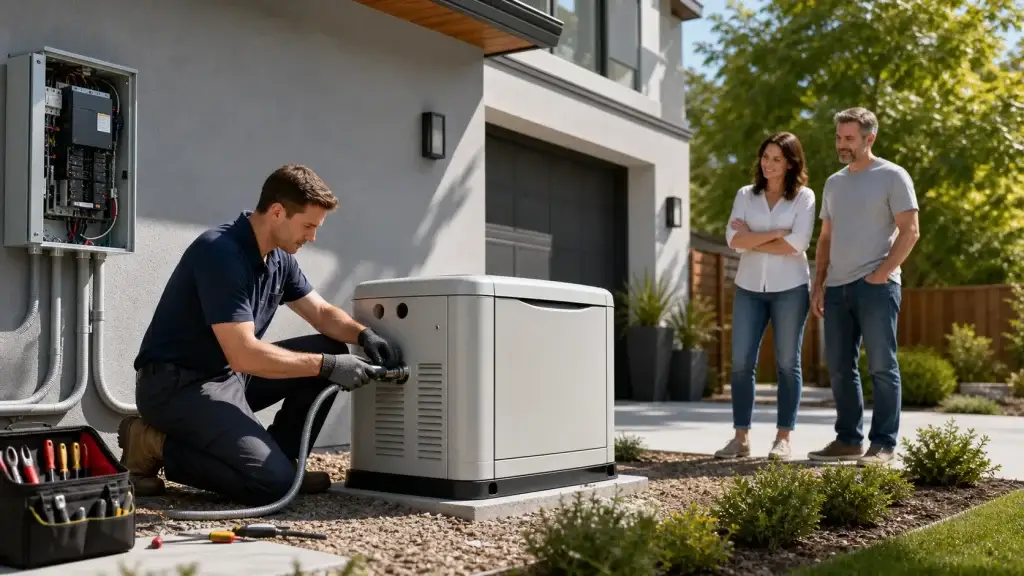
Choosing a standby generator is a long-term decision about how your home will function when the power goes out. Before the next storm creates a rush, we recommend taking time to learn what your household needs, what your property can support, and what a complete home generator installation involves.
For Houston-area families, October is a sensible time to plan ahead. Hurricane season can extend into late fall, and a calm conversation now gives you more room to compare options, ask questions, and make a decision that fits your family.
Make a Confident Backup Power Decision
More than a piece of equipment placed beside the house, a generator becomes part of your electrical system, fuel supply, and emergency plan. That is why we believe education should come before estimates.
Start by thinking about what an outage changes in your home. Some families want to keep a few priority items operating. Others want their homes to feel as normal as possible during an extended outage. Neither choice is automatically better. The right choice depends on your daily needs, expectations, and property.
Before meeting with an installer, it helps to write down:
- Appliances and systems you want running during an outage
- Recent power interruptions that affected your household
- Whether your home uses natural gas, propane, or another fuel source
- Any homeowner association rules that may affect equipment placement
Clear answers to these questions help us have a more useful conversation with you. They also make it easier to spot choices that could affect the generator size, location, permit process, and equipment needed for a safe installation.
Size a Generator Around the Loads That Matter
Generator size is based on the electrical loads you want to power, not just the size of your house. Two homes with similar square footage can have very different needs depending on their air conditioning, appliances, well pumps, pool equipment, medical devices, security systems, and electrical panels.
Many families choose between two general approaches. An essential-load system supports selected circuits, such as refrigeration, lighting, internet equipment, and a few other priorities. A larger standby system may support most or all of the home, including more demanding equipment. Both can be good choices when they match your goals.
During a professional home generator installation assessment, we look beyond a simple appliance list. Starting loads can be much higher than the power an appliance uses once it is running. We also consider your electrical panel, available fuel, and whether load management can help control high-demand equipment.
Thoughtful assessment can help avoid two frustrating outcomes: a generator that cannot support the items you expected to use, or a system that is larger than your household truly needs. Our role is to help you understand those tradeoffs clearly before equipment is selected.
Choose an Installer Who Plans Beyond the Sale
The equipment matters, but the planning process matters just as much. A dependable installer should ask questions about your power priorities, electrical system, fuel source, property layout, and local requirements. If the conversation begins and ends with a generator model, important details may be missed.
Dependable installers should ask questions about your power priorities, electrical system, fuel source, property layout, and local requirements. If the conversation begins and ends with a generator model, important details may be missed.
Several connected parts are often involved in a complete installation:
- Electrical work and transfer equipment
- Fuel piping and fuel supply planning
- Permit applications and inspections
- Equipment startup, testing, and warranty coordination
- Ongoing repair, maintenance, and monitoring support
We encourage you to ask who will manage each part of the process. You should know who handles permits, communicates about inspections, starts the equipment, and answers questions after installation. Those details can make a major difference when an outage occurs.
At Power Solutions Specialist, we combine technical experience with organized customer systems because both matter. You deserve understandable answers, clear expectations, and a team that treats your backup power plan as more than a transaction.
Plan a Safe, Code-Compliant Generator Location
Where a generator sits affects safety, performance, noise, service access, and local approval. Clearances from windows, doors, vents, structures, utility equipment, and property lines can vary based on the equipment and local code. Placement should never be treated as an afterthought.
Site reviews should consider the practical conditions around your home. For Houston properties, that includes drainage, heavy rain, flooding concerns, hurricane debris, sun exposure, landscaping, and access for technicians after severe weather. The generator also needs a stable pad and a route for electrical and fuel connections.
Distance matters too. A location that looks convenient may create challenges if it is far from the electrical panel or requires complex fuel-line routing. We review those details early so you can understand the full plan before installation begins.
Homeowner associations may add another layer. Some communities have rules about visibility, screening, sound, or approval steps. Checking those requirements before choosing equipment or a location can prevent unnecessary changes later.
Compare Estimates, Permits, and Generator Brands
Every complete estimate should explain the scope of the project, not just identify the generator. The equipment may require a transfer switch, pad, electrical work, fuel piping, load-management equipment, permits, labor, startup, and site-specific adjustments. If two estimates look very different, the included work may be different too.
We recommend asking for a clear explanation of:
- What equipment and installation work are included
- Which site conditions could change the project scope
- Who is responsible for permits and inspections
- How startup, warranty questions, and future service are handled
Brand comparisons deserve the same careful approach. A familiar manufacturer name is only one part of the decision. You should also consider available generator sizes, warranty terms, fuel compatibility, monitoring options, local parts availability, and whether the installer can service the equipment over time.
The best fit is the one that supports your household priorities and has qualified local support behind it. A generator should not become difficult to maintain simply because the buying decision focused on the equipment alone.
Build a Clear Installation Plan
Well-planned generator projects start with honest answers about what your family needs during an outage. Bring your must-have appliance list, outage experiences, fuel questions, and any HOA information to the conversation. That preparation helps turn a broad idea of “backup power” into a plan that makes sense for your home.
When sizing, placement, permits, installer support, and equipment choices are considered together, you can make a decision with more confidence. Careful planning now gives your household a clearer path to dependable power when daily life is interrupted.
Get Guidance Tailored to Your Home
At Power Solutions Specialist, we help homeowners evaluate their power needs, property conditions, and available options without pressure. Our team can provide clear guidance for home generator installation and answer the practical questions that matter before work begins. If you would like to discuss your situation, contact us for a thoughtful, straightforward conversation.