
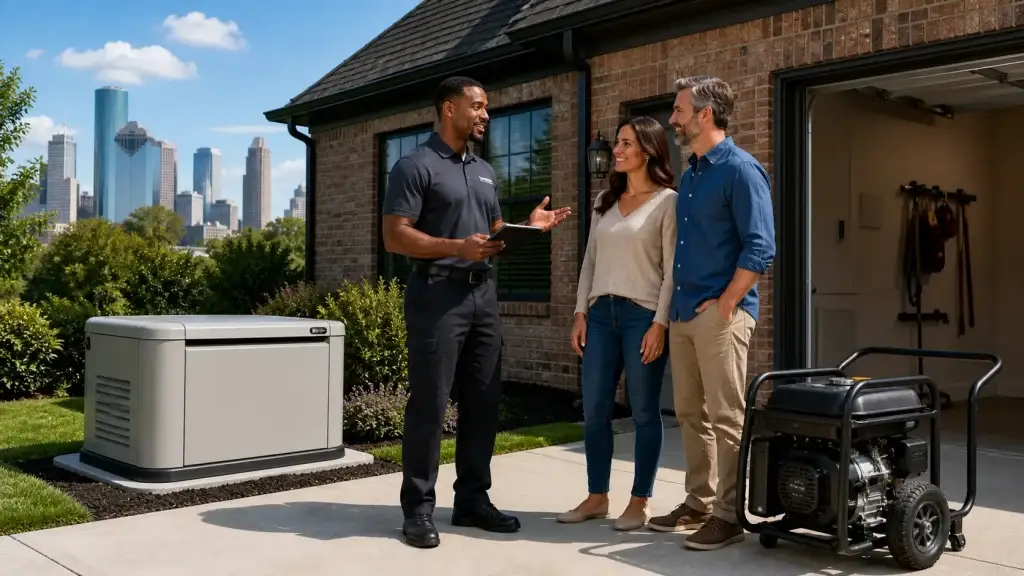
Choosing the Right Backup Power for Houston Homes
Backup power is not a luxury in Houston; it is part of smart home planning. Between hurricane season, heavy thunderstorms, and a stressed power grid, many families deal with outages that last hours or even days. When the AC stops and the house heats up fast, comfort, safety, and food storage all become real concerns.
Two common options are standby generators and portable generators. Both can be helpful, but they work in very different ways and fit different needs. In this article, we will walk through standby vs. portable generator pros and cons so you can decide what makes sense for your home, your budget, and your peace of mind.
We are a local Houston standby generator team focused on Briggs & Stratton systems. Our goal here is not to push one answer on you, it is to share what we see every day in real homes. Backup power is really about taking care of people and helping families feel ready when the lights go out.
How Standby and Portable Generators Work
First, it helps to understand how each type of generator fits into your house.
A residential standby generator is a permanent system. It sits outside, usually on a concrete pad, and is connected to your home’s natural gas line or a propane tank. When the power goes out, it turns on automatically within seconds and feeds electricity through a transfer switch to your main electrical panel.
Key points about standby generators:
- Permanent installation outside the home
- Runs on natural gas or propane, not gasoline
- Starts automatically when utility power fails
- Can power selected circuits or, when sized correctly, much of the home
A portable generator is more like a heavy-duty outdoor appliance. It has wheels and a handle, and it runs on gasoline. When the power fails, you roll it out to a safe outdoor spot, start it by hand, then plug in extension cords or connect it to a manual transfer switch that has been installed by a professional.
Key points about portable generators:
- Mobile unit that must be rolled out and put away
- Runs mainly on gasoline that you must store and refill
- Starts and connects by hand each time there is an outage
- Usually powers a smaller set of items like lights, fridge, and a few outlets
The right choice often comes down to how much power you need, how hands-on you want to be in a storm, and what level of comfort and safety you expect during an outage.
Standby vs. Portable Generator for Houston Weather Risks
Houston outages are not always short. After a hurricane or tropical storm, power can be out across large areas. Gas stations may be closed or out of fuel, roads may be blocked, and it can be hard to get more gasoline for a portable unit.
A standby generator that runs on natural gas or a properly sized propane tank can often operate for extended periods without refueling by hand. That can make a big difference when the power has been off for days and you are focused on your family, not on hauling fuel cans.
Hot, humid air is another big factor. During long outages:
- A standby system can often power central AC or several mini-splits, depending on size
- It can keep refrigerators and freezers running steadily
- It can help protect refrigerated medications and medical equipment
- It keeps indoor space more comfortable for older adults, infants, and anyone with health issues
With a portable generator, you are usually choosing a few key items instead of whole-home comfort. You may keep a window AC unit running in one room, protect the fridge, and charge phones. That can still be a solid short-term plan, especially for smaller homes or tight budgets.
But think about the setup: you might be outside in heavy rain or strong wind, rolling out the unit, connecting cords, and pouring gasoline in the dark. A professionally installed standby system, such as a Briggs & Stratton standby generator, simply turns on. The lights come back, and the house starts to feel normal again while the storm passes.
Costs, Maintenance, and Long-Term Value
Standby and portable generators do not just differ in how they run, they also differ in how you care for them over time.
With portable generators, the upfront cost of the unit itself is usually lower. But you accept more hands-on work and ongoing gasoline needs. You also need safe fuel storage, which is not always simple in a hot Houston garage.
Portable generator care often includes:
- Changing oil on a regular schedule
- Using fuel stabilizer if gasoline will sit for a while
- Keeping the unit clean and stored in a dry location
- Testing it from time to time so it is ready when needed
Standby generators come with higher upfront equipment and installation costs. In return, you get automatic operation and a system that is built into your home. Many homeowners also like that a professionally installed standby generator can be attractive to future buyers.
Standby generator care usually includes:
- Regular exercise cycles to keep parts moving
- Professional inspections and tune-ups
- Manufacturer-approved warranty support
- Monitoring so you know the system is ready for the next storm
For Houston in particular, long-term value is about more than simple dollars. Many families think about how often the power goes out in their neighborhood, the risk of power surges to electronics and appliances, and the comfort of having a system watched over by a specialist who can handle installation, monitoring, repairs, and warranty support.
Safety, Convenience, and Lifestyle Considerations
Safety should always come first with any generator.
Both standby and portable units must be used correctly to avoid carbon monoxide buildup. Generators should never run inside a garage or under an open window. Portable units also bring fuel storage questions, and they should never be plugged into a wall outlet, a practice called backfeeding, because that can be dangerous for both your home and utility workers.
Standby systems remove many of the manual steps. Once installed with a proper transfer switch, they start and stop automatically and are set up to work safely with your home’s wiring.
Lifestyle plays a big role too:
- Are there family members who would struggle to roll out, refuel, and connect a portable unit in bad weather?
- Is your home empty often due to travel or shift work, when storms might hit while you are away?
- How important is it to keep the whole house quiet and calm, instead of running cords across rooms?
- Do you want to avoid loud engine noise bothering you or your neighbors at night?
Choosing between standby vs. portable generator setups is really about what kind of outage life you are planning for. Some people only want to keep a few essentials running. Others want to keep working from home, keep kids comfortable, and keep daily routines going almost like normal during a multi-day outage.
It can help to think through a real Houston storm in your mind. If the power went out tonight and stayed off for several days, what would you want to still be working, and how much effort would you be willing to put in to keep it going?
How to Decide What Is Right for Your Houston Home
A simple way to narrow your options is to walk through a few key questions.
First, think about your budget range and how often you lose power in your area. Then look at what fuel you have access to. Do you have natural gas service at your home or room for a propane tank, or would you be relying on gasoline?
Next, consider your home and your needs:
- Home size and number of AC systems
- Critical circuits like refrigerators, freezers, and sump pumps
- Any medical equipment that must stay on
- Work-from-home needs like computers and internet equipment
Some homeowners find that a portable generator fits well if they live in a smaller home or townhome and just need lights, phone charging, and maybe a small AC unit in one room. Others, especially those with larger homes, multiple AC units, medical devices, or home offices, lean toward a standby system that can support a bigger part of the house.
Creating a simple priority list can help. Write down what you truly need powered, what would be nice to have, and what you can live without. That list becomes the starting point for choosing a generator type and size.
As local standby generator specialists here in Houston, we see our role as trusted advisors. A no-pressure home assessment can help you understand placement, sizing, fuel choices, and realistic expectations, so you feel informed and confident about whichever path you choose, now or later.
Secure Reliable Power Before the Next Outage Strikes
If you are still deciding between a standby vs. portable generator, our team at Power Solutions Specialist can walk you through the options that fit your home, budget, and safety needs. We will help you compare real-world scenarios so you know exactly what to expect when the power goes out. Ready to move forward or have specific questions about your property, pricing, or installation timelines? Simply contact us and we will guide you through every step.